



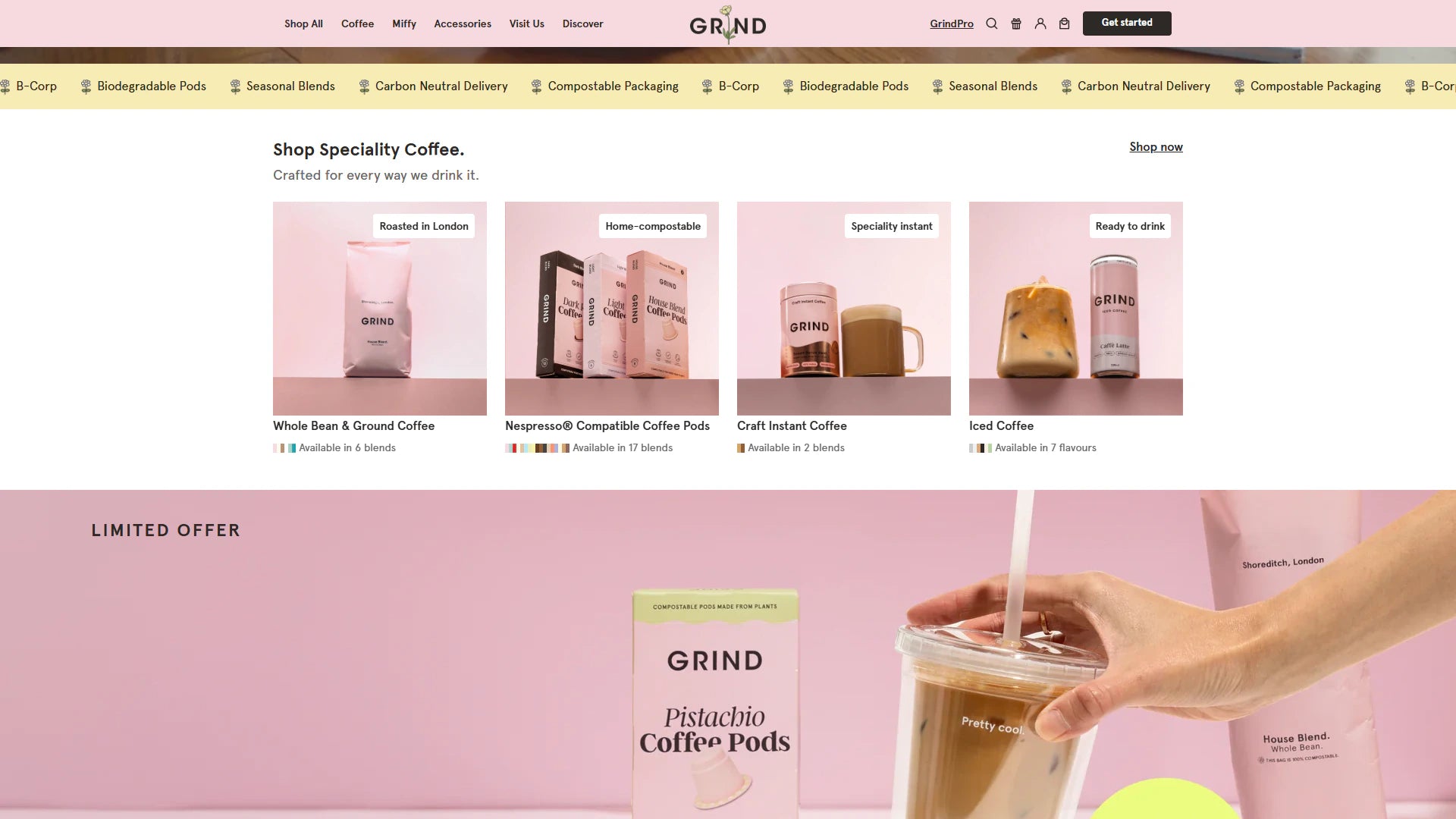
Product discovery
Help shoppers reach a relevant product through clear navigation, useful collection filters and search results that reflect how they choose.
Help shoppers find the right product, understand your offer and move confidently toward checkout. Our Shopify CRO services connect customer research, conversion audits, UX/UI design and theme development with a practical measurement plan.
Audit · UX/UI design · Shopify implementation · Measurement and iteration
Identify where existing traffic loses momentum across discovery, product pages and checkout.
Use customer evidence to decide what to improve and which working experiences to retain.
Help shoppers compare options, understand compatibility and find a suitable product.
Make purchase options, recurring terms and bundle choices easier to understand.
Clarify account access, ordering requirements and the information business buyers need.
Review touch controls, product information and cart journeys on smaller screens.
Review the moments that shape a purchase, from finding a suitable product to understanding the final order. Each area connects a customer question with a practical Shopify CRO priority.
Help shoppers reach a relevant product through clear navigation, useful collection filters and search results that reflect how they choose.
Answer questions about fit, materials, compatibility, delivery and returns where customers evaluate the product and decide whether it meets their needs.
Make variants, bundles and subscriptions easy to compare. Explain prices, availability and recurring terms before customers commit to an option.
Review touch controls, product details and cart actions on smaller screens. Keep essential information visible as shoppers move through the journey.
Clarify the order summary, delivery expectations and next action. Test cart updates and supported checkout changes with realistic purchase scenarios.
Check funnel events, consent behavior and reporting definitions so your team can distinguish a real customer problem from incomplete tracking.
Observed friction, severity, supporting evidence and customer-journey relevance.
Specific changes to hierarchy, content, interaction and merchandising, supported by annotated examples or wireframes where useful.
Theme, app, data, checkout and integration implications documented before implementation begins.
Testable statements that define the audience, proposed change, expected behaviour and decision the result should inform.
Events, properties, segments, quality checks and reporting definitions needed to evaluate the work honestly.
Immediate repairs, larger structural opportunities, dependencies and QA needs organized into a practical order of operations.
Align on the business model, audience, current performance questions and constraints.
Check whether events, consent and reporting definitions can support the intended decisions.
Inspect representative mobile and desktop paths with realistic products and customer states.
Connect observed friction to customer questions, commercial importance and technical causes.
Order opportunities by evidence, likely customer impact, effort, risk and measurement readiness.
Resolve hierarchy, content and interaction before production code locks in the wrong answer.
Build within the appropriate theme, app, Function, checkout or account extension surface.
Test responsive behaviour, accessibility, analytics and critical edge cases before release.
Observe the agreed indicators without turning correlation into a claim the data cannot support.
Keep, revise or retire the change based on evidence and the next most useful question.
| Criterion | Question | Why it matters |
|---|---|---|
| Evidence strength | What reliable behaviour or research supports the finding? | Prevents opinion from being presented as certainty. |
| Customer impact | How important is this moment to understanding or progressing? | Keeps attention on meaningful friction. |
| Business importance | Which commercial or operational goal does it support? | Connects interface work to an accountable reason. |
| Technical effort | What theme, app, data or platform work is required? | Makes sequencing and resourcing realistic. |
| Implementation risk | What could regress or become harder to operate? | Protects existing journeys and merchant workflows. |
| Measurement readiness | Can the team evaluate the change credibly? | Clarifies whether to test, ship or research first. |
A visible defect can be repaired without running an experiment. A less certain design hypothesis needs an appropriate measurement plan. Before an A/B test, agree the primary metric, audience, decision rule and whether traffic can support a useful result. Document inconclusive results as well as successful changes.

A broad organic-living catalog organized into a more coherent responsive storefront.

A year, make and model finder that helps customers narrow a compatibility-led catalog.

Subscription and product storytelling work for a repeat-purchase coffee proposition.
These examples verify relevant UX and Shopify implementation—not quantified CRO outcomes where publishable evidence is unavailable.
“We hired Vivek for setting up an A/B test in an new theme, which he carried our professionally, with good communication & exactly according to briefing, with very little feedback looping 🤘”
A/B test: main images and variant images · verified Upwork review
Read the supporting reviewA defined review and prioritized roadmap when the team needs clarity before design or development.
Design, build and QA an agreed set of improvements with explicit acceptance criteria.
Work through a changing optimization backlog without forcing every item into a separate proposal.
Maintain a measured design, development and release rhythm across a continuing roadmap.
Use customer-journey evidence to shape a broader UX/UI and theme redesign rather than starting from visual preference.
Define the funnel events, reporting checks and success criteria needed before commissioning a test or evaluating a release.
If research suggests customers cannot find delivery information, a hypothesis could be that clearer delivery messaging near purchase controls reduces uncertainty. That is a proposed explanation, not evidence that a new layout will increase revenue.
Build the investigation around an actual customer task, such as understanding delivery before adding an item to the cart. Review the current journey, available customer feedback and event data together. Define what would count as a useful improvement before changing the page, and keep pricing or campaign changes in the record so they are not mistaken for a design effect.
Compare the delivery information customers see on the product page with the cart and delivery policy. A proposed test should identify the affected audience, primary measure and conditions that would make the result inconclusive. If traffic is insufficient for a useful experiment, document the usability evidence and use a more suitable evaluation method.
Illustrative scenario for scoping the work, not a reported client result.Shopify CRO finds storefront friction, forms evidence-backed hypotheses, implements responsible changes and measures the intended customer behaviour across discovery, product, cart, checkout and account journeys.
No. Lower-traffic stores can still repair usability, education and analytics problems. Formal A/B tests may need more volume, so qualitative evidence or careful release measurement can be more appropriate.
Useful inputs include the store URL, priorities, target customers, analytics, current theme, app stack, support questions and previous research. The audit separates verified evidence from assumptions.
Yes. Existing themes can often improve through reusable Liquid, CSS, lightweight JavaScript, structured product data and app configuration. Rebuilding is recommended only when the architecture blocks responsible iteration.
Yes. Vivek Codes can provide the audit, UX/UI design, Shopify implementation, responsive QA, analytics validation and release—or hand over a decision document to another team.
Yes. Work can cover supported checkout UI extensions, Functions, validation, delivery, payment, customer events and post-purchase surfaces, subject to the store’s plan and Shopify’s extension points.
We can define hypotheses, prepare variants, implement tests, validate analytics and document results. Method and platform depend on traffic, architecture, consent and the decision being tested.
Measurement is agreed before implementation and tied to a relevant funnel, interaction or customer decision. Data-quality and interpretation limits are documented with the result.
Yes. The review can cover purchase-option clarity, defaults, bundle rules, inventory, cart data, accounts and fulfillment across Recharge, another platform, native Shopify or custom work.
Timing depends on scope, evidence and whether implementation or testing is included. A focused audit is separate from a redesign or ongoing experimentation roadmap.
Tell us where you want to take your Shopify business. Vivek will review your goals and discuss a practical way forward.
Paid projects, development hours and ongoing support. Scope and cost are agreed before work starts. Explore working options.
Share your store, the journey causing concern and the available evidence. Vivek will recommend an audit, implementation or broader redesign.